Canadian wool and wood, built by hand in Nova Scotia.
Acoustic wall panels with wool inside and out, on a spruce frame. From $79. Shipped anywhere in Canada.
Shop the panels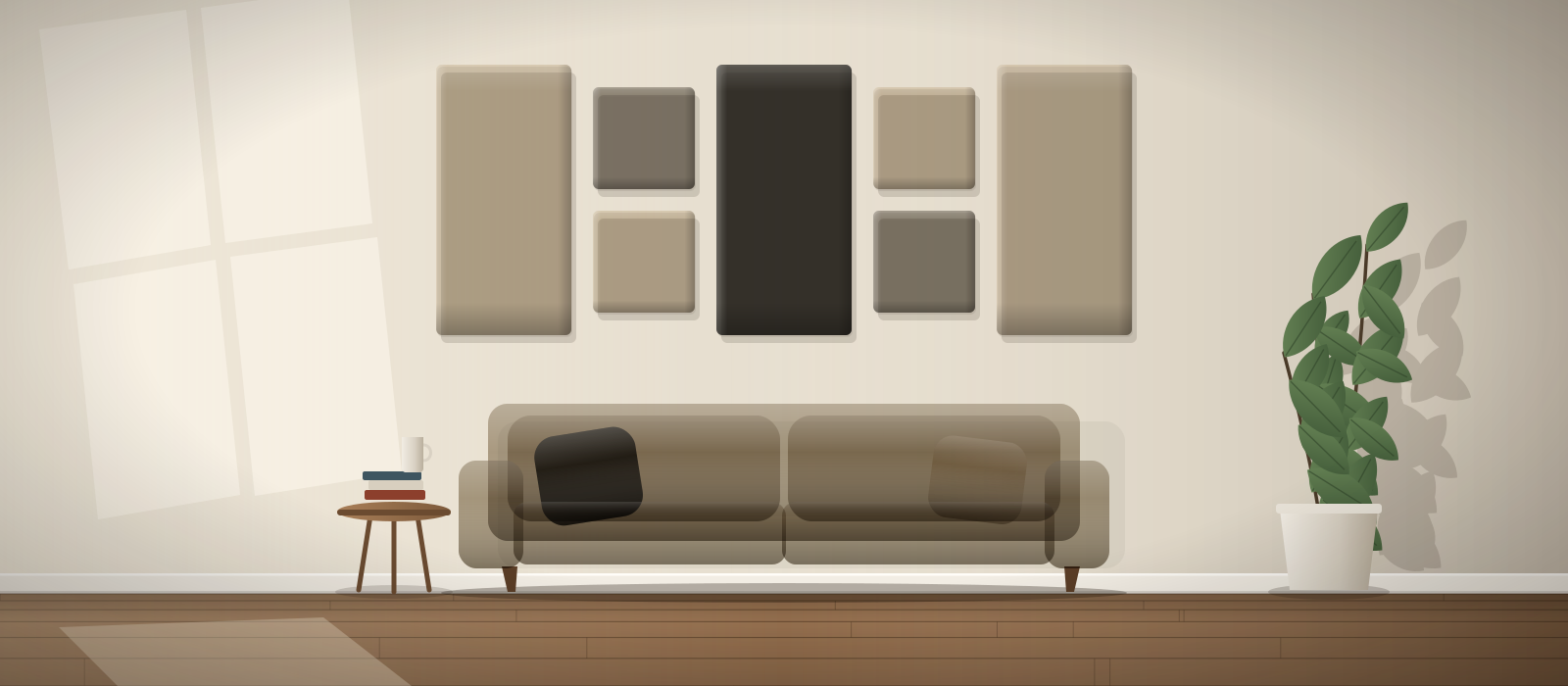
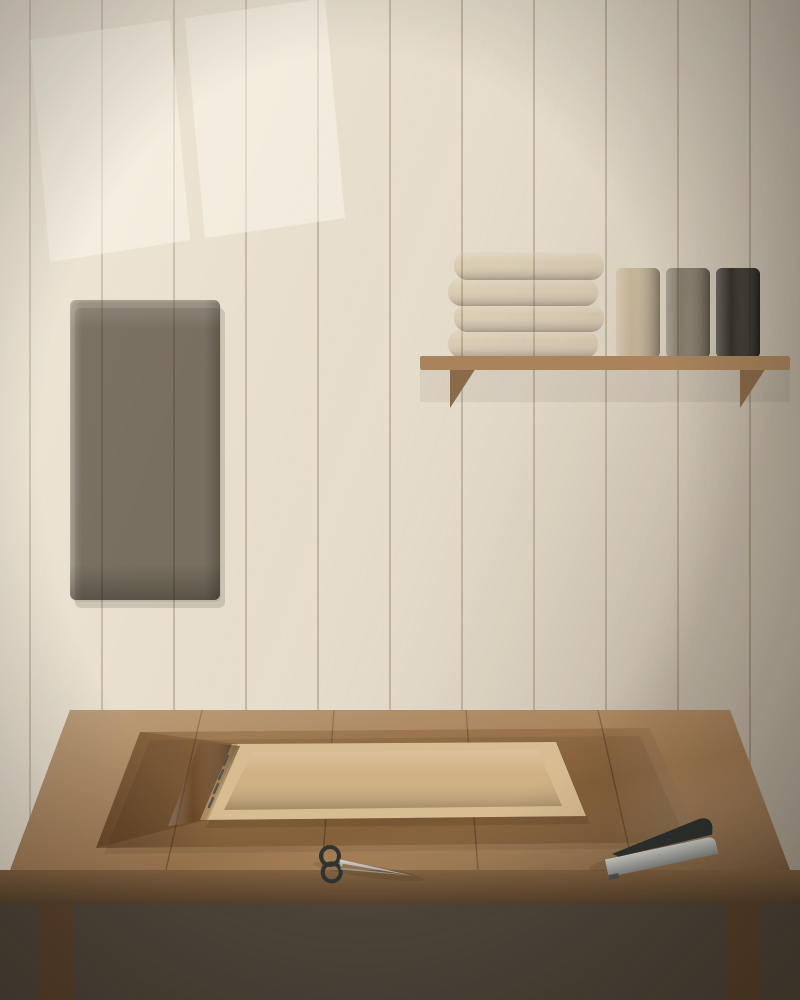
We make one thing: a wool panel that takes the echo out of a room.* We make every one of them ourselves.
The fleece is shorn on farms in region.* It’s washed in hot water and soap, carded into thick batts, and wrapped in wool cloth that weaver weaves for us. We build every frame by hand from Canadian spruce in our workshop in town. Wool inside, wool on the front and back. No foam, no fibreglass, no polyester, no glue.*
We work with Canadian wool because it’s the material we’re proudest of, and because it grows here. We stand behind every panel that leaves our workshop. Hang one in a bedroom, a nursery, or behind the desk where you spend your days.
Your names
Woolhush, town, Nova Scotia
60 × 60 cm, Natural, undyed
How we make a panel
Five steps from the sheep to your wall. Every one of them happens in Nova Scotia.
-
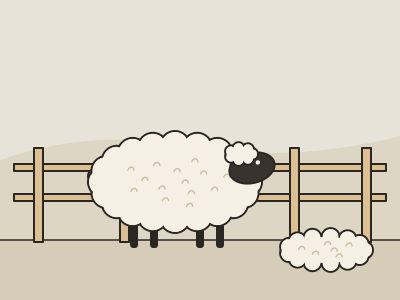
1Shearing
Fleece shorn at farm, county.
-
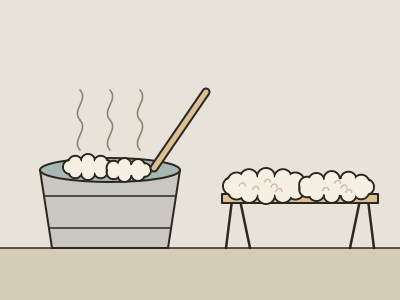
2Washing
Washed in hot water and soap to lift out the lanolin and the dirt.
-
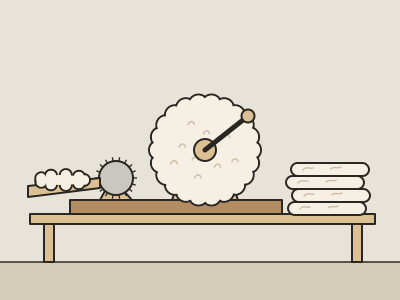
3Carding
Combed into thick, springy batts for the inside of the panel, then frozen to kill any moth eggs. No binder, no borate, no moth-proofing.
-
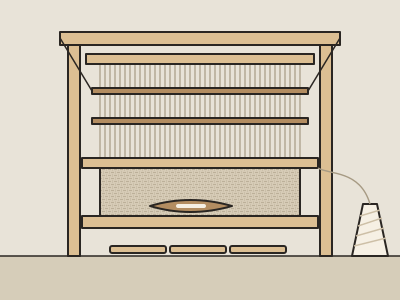
4Weaving
Woven by weaver into an open wool cloth for the front, so sound passes through to the batt behind it. The yarn is left natural or dyed with plants.*
-
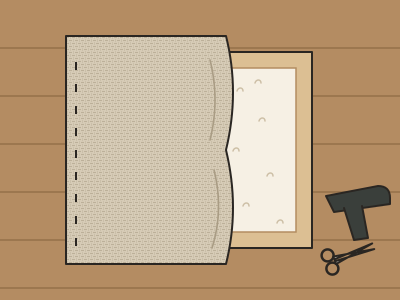
5Wrapping
We set the batt in a hand-built spruce frame, pull the cloth tight over it and staple it at the back. Not a drop of glue.
Why wool, and nothing else
Wool is made for this work. Every fibre is crimped like a little spring, so a thick batt is mostly tiny pockets of trapped air. Sound goes in, and far less of it comes back out. Voices, keyboards and kitchen clatter stop ringing around the room.*
It’s as natural as a material gets. Sheep grow a new fleece every year. People have slept under wool, worn it and wrapped their babies in it for thousands of years.
And it’s good to live with. Wool is soft and warm to the touch, and ours has nothing synthetic in it to shed or give off into the air.* We’re proud to see it in a nursery, beside a crib, or behind the desk where you spend your days. We’ll publish the emissions report so you can read it yourself.
See what’s in a panelBabies have slept in wool for generations. We’re proud to put it on their walls.
How many do you need?
Questions
Where does the wool come from?
From sheep farms in region, Nova Scotia.* None of it comes from outside Canada.
Is there anything in it besides wool?
A spruce frame we build ourselves, a few steel staples and the two screws it hangs on. The batt, the cloth on the front and the back are all wool. No foam, no fibreglass, no polyester, no glue, and no moth-proofing on the wool.*
How are the colours made?
Natural is the wool exactly as it grows, never dyed. For every other colour, the yarn is dyed with natural plant dyes before it’s woven.* No synthetic dyes.
How do I hang them?
Tape the paper template to the wall and drive in the two screws, with the anchors if it’s drywall. Leave the heads out as far as the template shows, then lower the panel onto them. Two keyhole slots in a bar on the back catch the screw heads, and the panel sits flat and tight against the wall. About five minutes a panel.
What about moths?
We freeze the wool after carding, which kills any moth eggs. Cold does the job, so there’s no moth-proofing chemical in a Woolhush panel.
Do you ship outside Canada?
Not yet. We ship to every province and territory.
We’ll publish the lab report or certificate behind this before we launch.